Objective
The coming decades will be shaped by two major societal challenges: climate change and demographic transitions, particularly population ageing. These global trends are transforming how we live, work, and move. On one hand, efforts to mitigate climate change are encouraging shifts toward more sustainable mobility solutions, such as walking and cycling—forms of active transportation that place greater demands on the human locomotor system. On the other hand, demographic ageing is accompanied by a rise in physical inactivity, especially among older adults, which the World Health Organization has identified as the fourth leading risk factor for global mortality.
Understanding how the locomotor system develops, functions, and repairs itself is therefore essential to address these emerging needs.
The MuSkLE-PhD programme is built around this vision. It aims to train a new generation of researchers capable of investigating the locomotor system from its developmental origins to its physiological function in adulthood and its capacity to regenerate and repair after injury or diseases. While grounded in the biological sciences, this scientific ambition requires the integration of complementary disciplines such as physics, mathematics, and the social sciences, an interdisciplinary approach rarely offered within conventional doctoral programs. To achieve this, the programme incorporates opportunities for secondments and short visits with partner institutions across different fields, providing students with diverse, hands-on interdisciplinary experience.
The MuSkLE-PhD programme will support the training of 55 PhD students, each funded through a 36-month fellowship, over a total program duration of 60 months. Candidates will be selected through 3 competitive calls for applications, conducted with full transparency and in alignment with European Union principles of fairness, inclusiveness, gender equality, merit-based evaluation, open competition, ethics, international mobility, environmental responsibility, and sustainability.
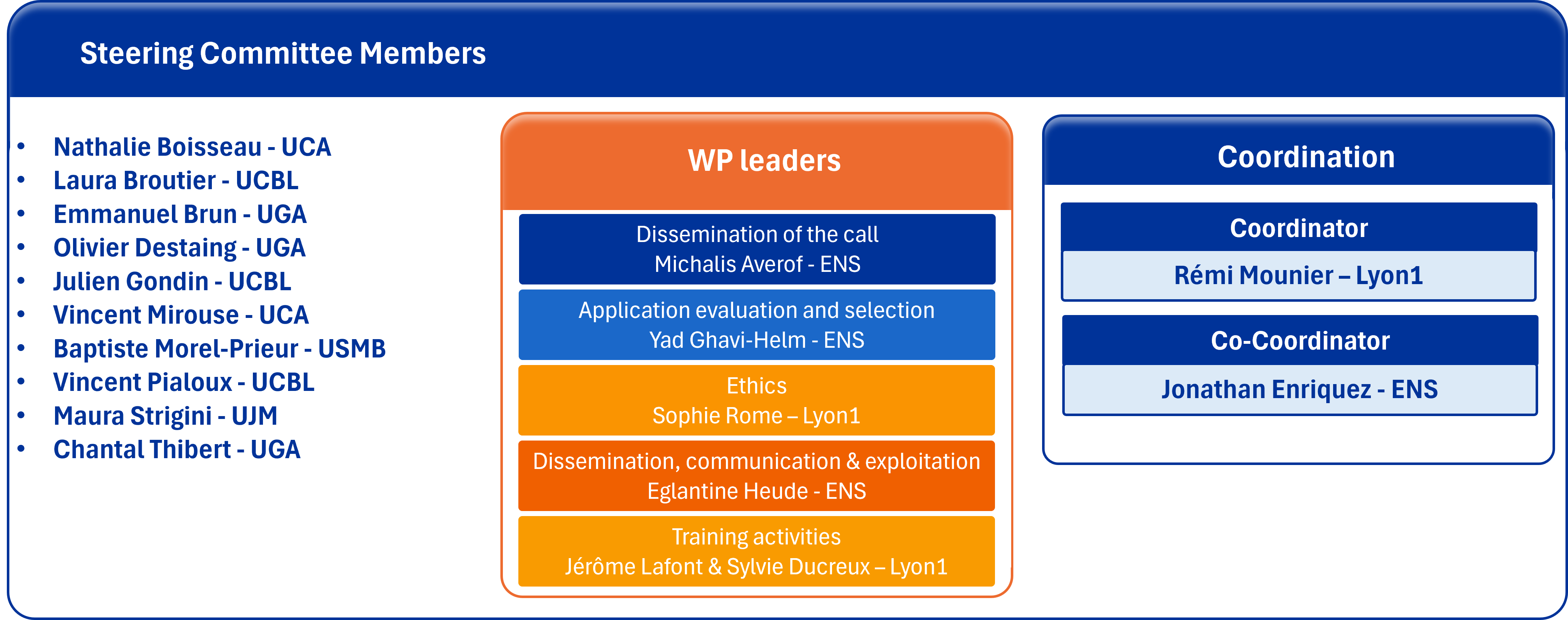
Governance